Firewood Heating Guide
Cord sizes, seasoning, hardness and wood-stove tips
Cord sizes explained
A bush cord is the standard full cord: 128 cubic feet, stacked 4′ × 4′ × 8′.
Understanding cord sizes protects you when buying and helps you order the right amount.
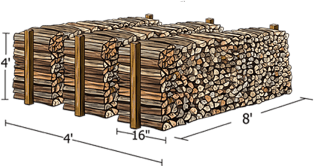
Bush Cord
128 cu ft · 4′ × 4′ × 8′ · Three face cords
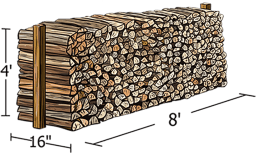
Face Cord
16″ × 4′ × 8′ · About one-third of a bush cord
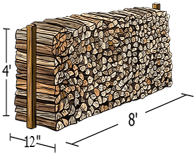
Stove Cord
12″ × 4′ × 8′ · Cut shorter for smaller stoves
In Ontario, firewood is sold by the cord or a fraction of a cord — not by the "truckload" or "pile." A straight seller will always tell you the cord volume.
How much do I need?
It depends on your home, your stove, and your winter — use the estimator.
A typical rural Ontario home burning wood as its main heat source uses roughly 4 to 7 full cords a winter. Supplemental use is far less. Dial in your numbers below.
Cord Estimator
Slide to match your situation — the estimate updates instantly. Not a guarantee; every home is different.
Wood heat tiers
Not all wood burns equal — species matters a lot.
For serious heating, stay in the top tier. The bottom tier is fine for campfires and getting a fire started, but won't carry you through a cold night.
Seasoning & storage
Properly seasoned firewood takes at least six months to dry — never burn wet wood in a stove.
Stack it right
Off the ground, bark side up. Cover only the top — sides open let air circulate. A basic rack makes a big difference.
Wait for it to season
At least six months for most species. Seasoned wood greys, splits at the ends, and sounds hollow when knocked together.
Ash is the exception
Ash can be burned almost right away after cutting. Every other common species needs a full season — usually longer.
Bring it inside first
Move a day's worth inside before burning so it reaches room temperature. Cold wet wood smokes, smoulders, and builds creosote.
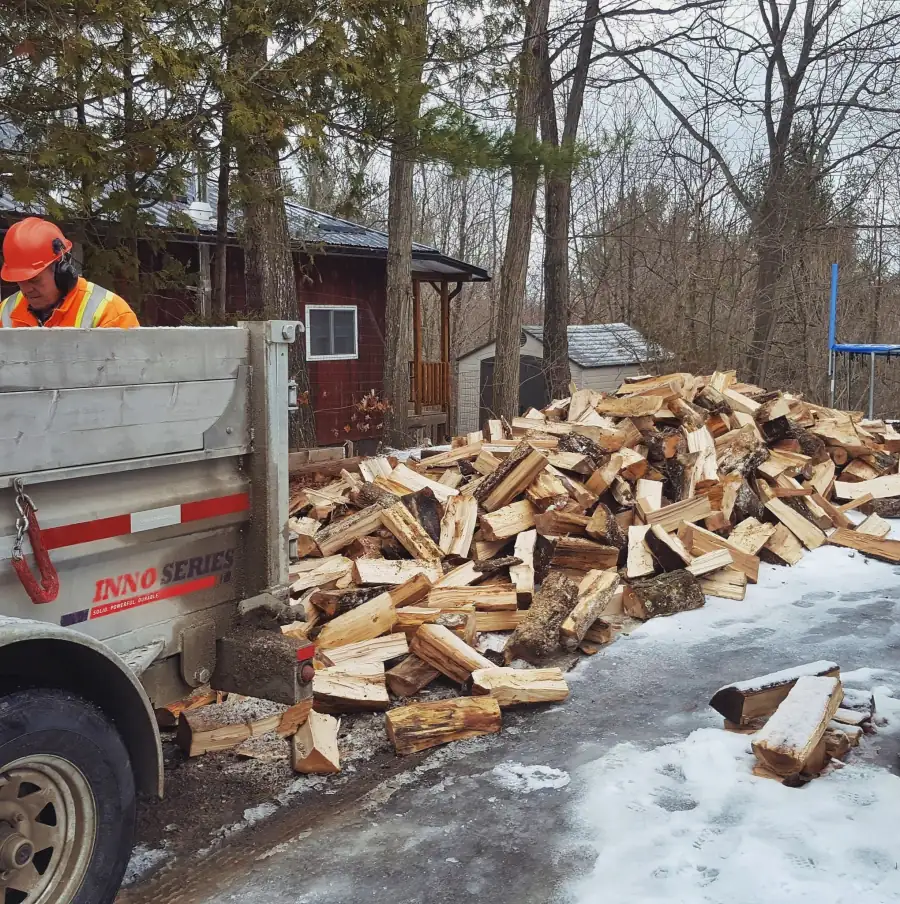
Burning & safety
Burning wet wood builds creosote and risks a chimney fire — clean your chimney every year.
Dry wood only
Wet wood smokes heavily, produces little heat, and coats your flue with creosote. Seasoned wood is your first line of defence.
Stove temperature
A common wood-stove operating range is roughly 150–300 °C. Too cool and you get smouldering; too hot risks damage to the stove.
Annual chimney sweep
Have your flue swept every year by a certified WETT technician. Creosote buildup is a fire hazard regardless of wood quality.
Always obey fire regulations. External resources: Woodheat.org · Hearth.com forum.
Common questions
Firewood FAQs
What's the difference between a bush cord, face cord and stove cord?
A bush cord is a full cord, 128 cu ft (4×4×8 ft); a face cord is about a third of that (16"×4'×8'); a stove cord is cut shorter, 12" deep, for smaller stoves.
How much firewood do I need for the winter?
A rural Ontario home heating mainly with wood usually burns about 4–7 full cords a season; far less if wood is supplemental. Use our estimator or call and we'll help you figure it out.
How can I tell if firewood is properly seasoned?
Seasoned wood has greyed, the ends are split and cracked, it's noticeably lighter, and two pieces knocked together sound hollow rather than dull.
How long does firewood take to season?
At least six months — longer for dense hardwoods like oak.
Can I burn wet or green wood in my stove?
No — it gives little heat, builds creosote and risks a chimney fire.
What's the best firewood for heating?
Dense hardwoods like ironwood, oak, sugar maple and beech burn longest and hottest; ash is a favourite because it can be burned sooner.
How is firewood legally sold in Ontario?
By the cord or a fraction of a cord — not by the "truckload" or "pile." A straight seller always tells you the cord volume.
How should I store firewood?
Up off the ground, stacked loosely for airflow with bark facing up, covered on top but open on the sides.
What is creosote and how do I prevent it?
Creosote is a flammable, tar-like residue that builds up inside your chimney when wood burns at low temperature or when wet wood is burned. It's the leading cause of chimney fires in Canada. To minimize it: always burn properly seasoned wood (moisture below 20%), keep your stove running at adequate temperature rather than just trickling overnight, and have your flue swept by a certified WETT technician at least once a year. Dry wood and a hot fire are your best defence.
What temperature should a wood stove run at?
Most wood stoves run best in the 150–300 °C range measured at the flue with a stovepipe thermometer. Below about 120 °C you're in the creosote zone — wood smoulders, combustion is incomplete, and deposits build up fast. Much above 370 °C you risk damaging the stove itself. Running hot isn't just safer — it's more efficient. You get more heat out of less wood, and your flue stays cleaner.
Can I burn softwood like pine or spruce in my wood stove?
Yes, carefully. Softwood lights fast and is great for kindling or getting a cold stove going. The problem with relying on it for primary heating is that it burns quickly and its resin content can contribute to creosote buildup in your flue. It won't carry you through a cold night the way a dense hardwood like maple or beech will. Softwood is fine occasionally — for all-day or overnight heating, stick to hardwood.
Want seasoned wood you can trust, in a full measure? Call or text for a quote.